Building Client Trust in an AI-Powered Marketing Workflow: The Questions Your Clients Are Actually Asking
Your client calls. They've seen something, maybe a social caption that read oddly, or they overheard a colleague mention that AI is writing marketing content now, and suddenly they're asking: "Is a bot writing our stuff?" The question isn't hostile. It's worried.
This is the credibility gap every agency faces when AI enters the conversation. Many agencies try to sidestep it: they use AI quietly, bury the fact in service descriptions, or hope clients never notice. But silence doesn't protect trust. It destroys it. The moment a client discovers AI in your workflow without you having explained it first, you've lost control of the narrative. They're not asking "How do you use AI?" anymore, they're asking "What else haven't you told us?"
The solution isn't to hide your AI workflow. It's to own it, explain it clearly, and show exactly how humans remain in control. In our experience, transparency, when done right, doesn't erode trust. It builds it. This guide covers the real questions clients ask about AI in marketing workflows, the fears beneath those questions, and how to answer with confidence and specificity.
Why Clients Are Already Asking About AI, Even If You Haven't Told Them
Your clients live in the same world you do. They read headlines about AI, scroll past ChatGPT discussions on LinkedIn, and hear vendors pitch "AI-powered solutions" weekly. They arrive at your door with preformed assumptions, some accurate, many not, about what AI does and what it means for their marketing.
When you stay silent about your AI use, you don't protect them from anxiety. You extend it. Clients who suspect you're using AI but hear nothing official from you start filling in the blanks themselves. They imagine worst-case scenarios: fully automated content, zero human review, generic templates applied to their brand, work outsourced to the lowest bidder. None of that may be true, but your silence gives their fears room to grow.
Conversely, agencies that name AI use upfront and explain how it actually works, what humans decide and what AI handles, short-circuit the speculation. You move from defensive positioning ("We don't do that") to confident explanation ("Here's exactly how we use it, here's who oversees it, here's why it makes your work better"). That's a fundamentally different conversation.
Consider Meridian Consulting, a mid-sized professional services firm that hired an agency for content strategy. Within the first month, they notice the team delivered a competitive analysis, messaging framework, and content calendar faster than expected. Before you mention AI at all, they ask. Because they know something moved quickly. Now you have a choice: admit you used AI-powered research and strategy tools to compress weeks into days, then show them the human strategist who shaped every finding, or pretend the work came from pure human effort and lose credibility the moment they learn otherwise. Proactive transparency wins that moment every time.
The Real Client Objections Around AI-Powered Marketing
Clients rarely ask the question they're actually worried about. They ask about technology when they're really worried about outcomes. Understanding the gap between the surface question and the underlying fear is the key to answering convincingly.
Loss of Human Touch
What they ask: "Will AI replace your writers?"
What they're actually afraid of: "Will anyone at your agency actually care about understanding my business, my audience, my competitive position? Or am I just getting a commodity service?"
The fear here isn't about automation itself. It's about depersonalization. They're worried that AI-powered workflows are shortcuts that let agencies serve more clients with fewer humans, which means less attention to their specific situation. They want to know that a real strategist has spent time with their business, not just applied a template.
Brand Voice Inconsistency
What they ask: "Will AI content sound like us?"
What they're actually afraid of: "Will your AI make us sound generic, identical to our competitors, like every other company in our industry?"
This fear stems from real experience. Clients have seen generic AI content. They know it lacks personality, misses industry nuance, and sounds mass-produced. They're not rejecting AI on principle. They're rejecting the idea of becoming indistinguishable from their competition because an algorithm can't capture what makes them different.
Quality Control and Accountability
What they ask: "Who's checking the AI output for mistakes?"
What they're actually afraid of: "If something goes wrong, a factual error, an off-brand comment, something that damages our reputation, whose fault is it? Can I hold someone accountable?"
Clients need to know that humans review, edit, and approve everything before it touches their brand. They need clear ownership. When they ask about quality control, they're really asking: "Are there guardrails here, or is this automated?"
Uncertainty About Control and Transparency
What they ask: "How does this actually work?"
What they're actually afraid of: "Am I losing visibility into your process? Will I be able to understand how decisions got made, what data informed them, and whether they align with our strategy?"
Clients want to stay informed. They don't want to feel like a black box is making decisions about their brand behind closed doors. They want to see the thinking, not just the output.
Answering the Human Touch Question With Specificity
Here's what you do not say: "Don't worry, we still have humans involved." That's vague and defensive.
Here's what you do say: "Our senior strategist reviews every piece of content before it leaves our shop. Here's her background. Here's how she thinks about your industry. Here's what she actually touches and decides."
AI-assisted marketing still requires human judgment at every critical moment. Humans decide the strategic direction. Humans set the tone and voice guardrails. Humans understand your competitive context and cultural sensitivities. Humans make the final call on what goes live.
What AI handles is volume, speed, and drafting. It accelerates research. It synthesizes data. It generates options. It flags patterns. But it doesn't decide. It doesn't own the work. A human does.
The value of this split isn't that AI replaces work, it's that it frees your team from low-value repetition. Instead of spending eight hours researching competitor messaging by hand, your strategist spends two hours synthesizing AI-generated research and adding strategic judgment. Instead of writing three drafts before finding the right tone, your writer refines one AI draft that's already 80% there. The human expertise shifts from "produce volume" to "think strategically."
When you explain this to clients, use role-specific language. Don't say "We use AI." Say: "Our strategist uses AI research tools to identify patterns faster, then applies ten years of industry experience to translate those patterns into your specific strategy. Our copywriter uses AI drafting tools to explore options, then edits for your voice and refines the messaging. Nothing moves forward without her approval." That's concrete. That's reassuring. That's specific to their situation.
Addressing Brand Consistency and Quality Control
Brand inconsistency through AI typically happens one of two ways: either the AI isn't trained on your brand voice and positioning, or humans aren't reviewing the output before it ships. Both are solvable problems, and naming the solution builds confidence.
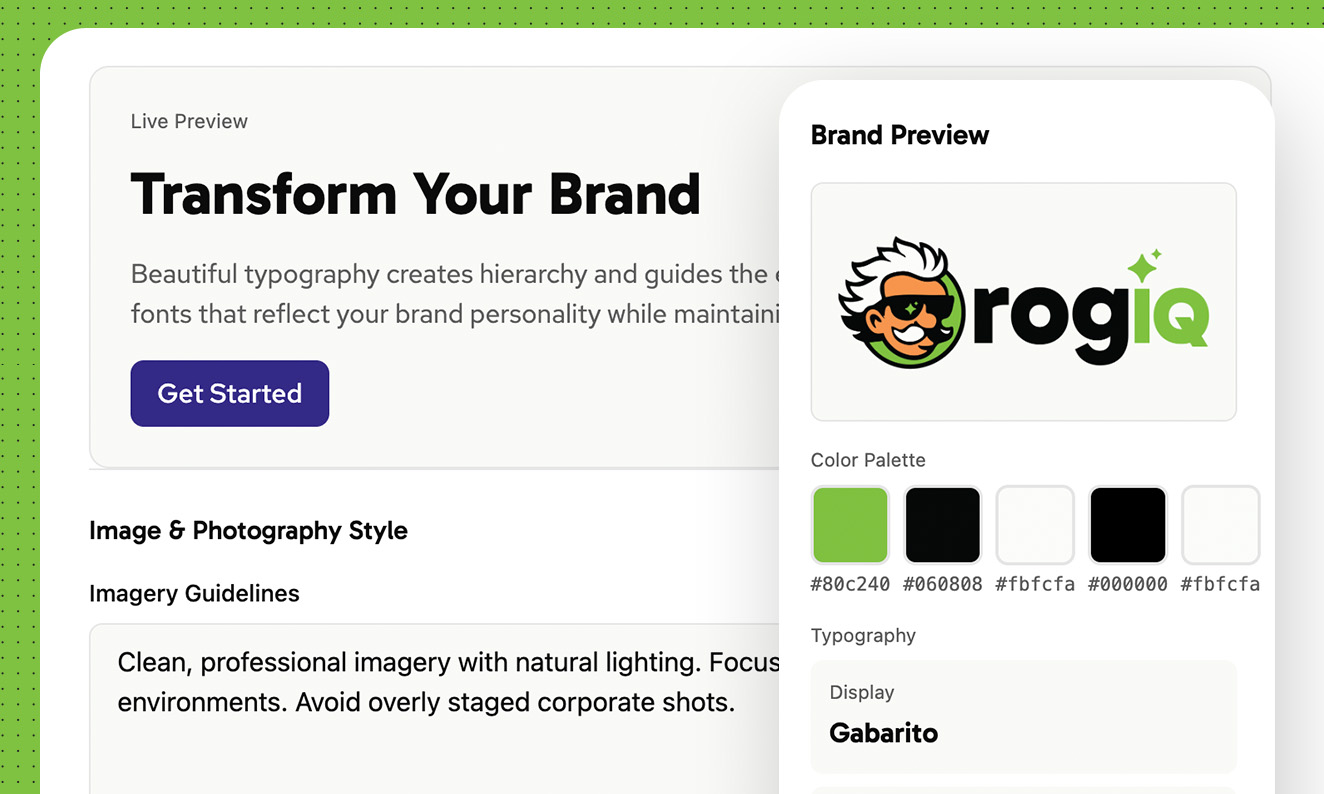
First, explain how you ensure brand consistency in your AI workflow. If you're using tools that learn from your past content, messaging guidelines, and competitive positioning, say so. The more specific you can be about what the AI actually "knows" about your brand, real examples from your previous work, specific messaging pillars, visual identity requirements, the more clients understand that this isn't generic automation. This is trained automation, shaped by your actual brand.
Second, explain your review process. Not in general terms. In specifics. Say: "Before any content is scheduled, it's reviewed by our senior copywriter against this checklist: brand voice alignment, factual accuracy, strategic alignment with your quarterly goals, and competitive positioning. She marks up the draft, makes revisions, and signs off. You see the final version before it goes live." That's a governance structure. That's accountability. That's not "we check the work." That's "here's exactly who checks it and what they're checking for."
A word of caution: reviewing AI output at scale requires rigor, not just intention. If you promise human review but your team is drowning in volume and only spot-checking content, that's a problem waiting to surface. The promise of AI-powered efficiency only works if you actually build in the time for human judgment. Otherwise, you're pushing out faster work that hasn't been properly vetted. The trade-off here is real: speed is only an advantage if quality stays intact.
Governance and Review as Trust-Building Tools
Most agencies treat governance as an internal safeguard. Smart agencies treat it as a communication tool. Your review processes aren't just how you protect quality. They're how you prove to clients that quality is protected.
Make your governance visible. Walk clients through it. Explain who reviews what, when, and why. If you use checklists for content approval, share the checklist. If you have specific brand voice guidelines that your team references, let them see those guidelines. If you have escalation steps for certain types of content, name them. Transparency about the process is what builds trust.
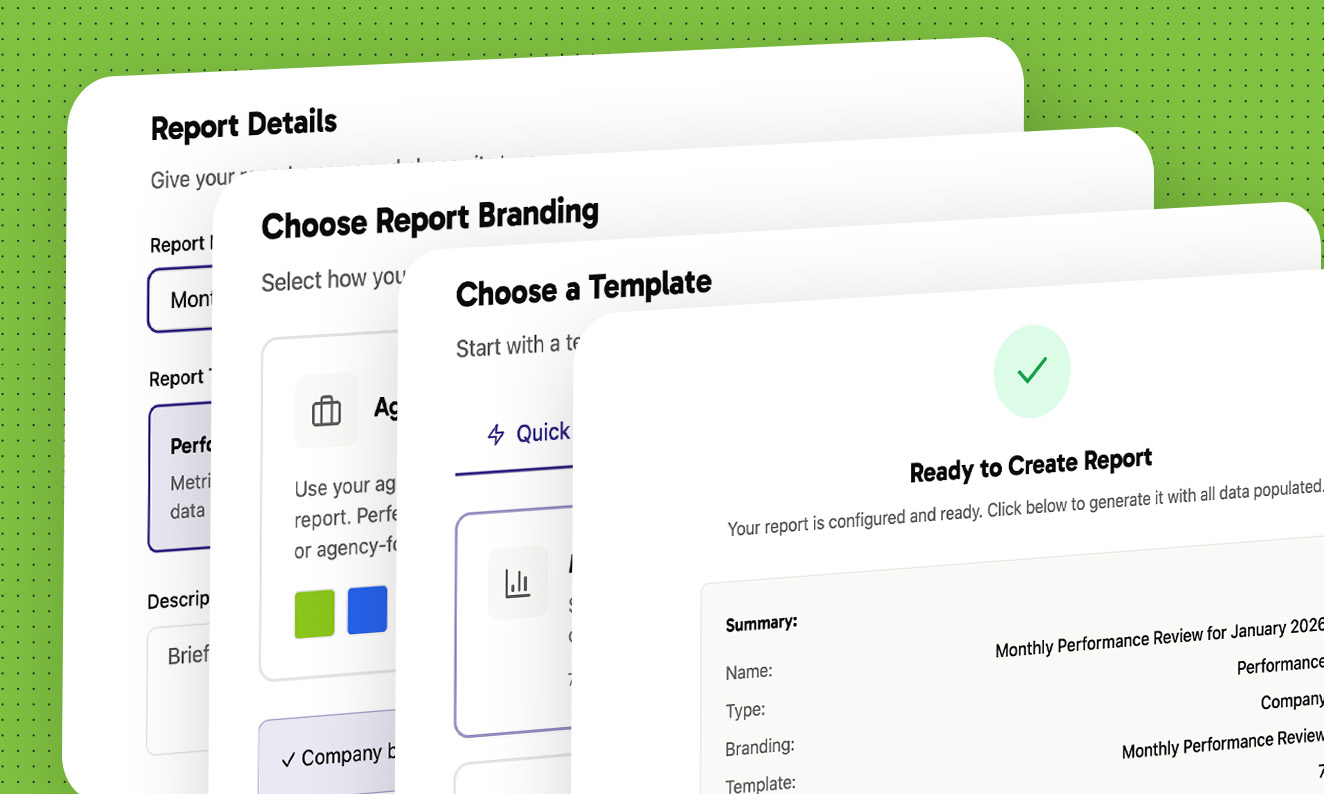
Consider also building governance into your reporting. When you deliver monthly analytics to clients, include a note about review volume: "This month we created 47 pieces of content. All 47 were reviewed by [name] against our brand voice guidelines and your strategic priorities. Here's what changed in revisions." That reinforces that humans are actively involved and accountable for the output.
Visit our website