The Marketing Business I Wanted to Build Changed Over Time
Looking back, I realize the agency I was trying to build thirty years ago isn't the same agency I'd choose to build today.
Looking back, I realize the agency I was trying to build thirty years ago isn't the same agency I'd choose to build today.
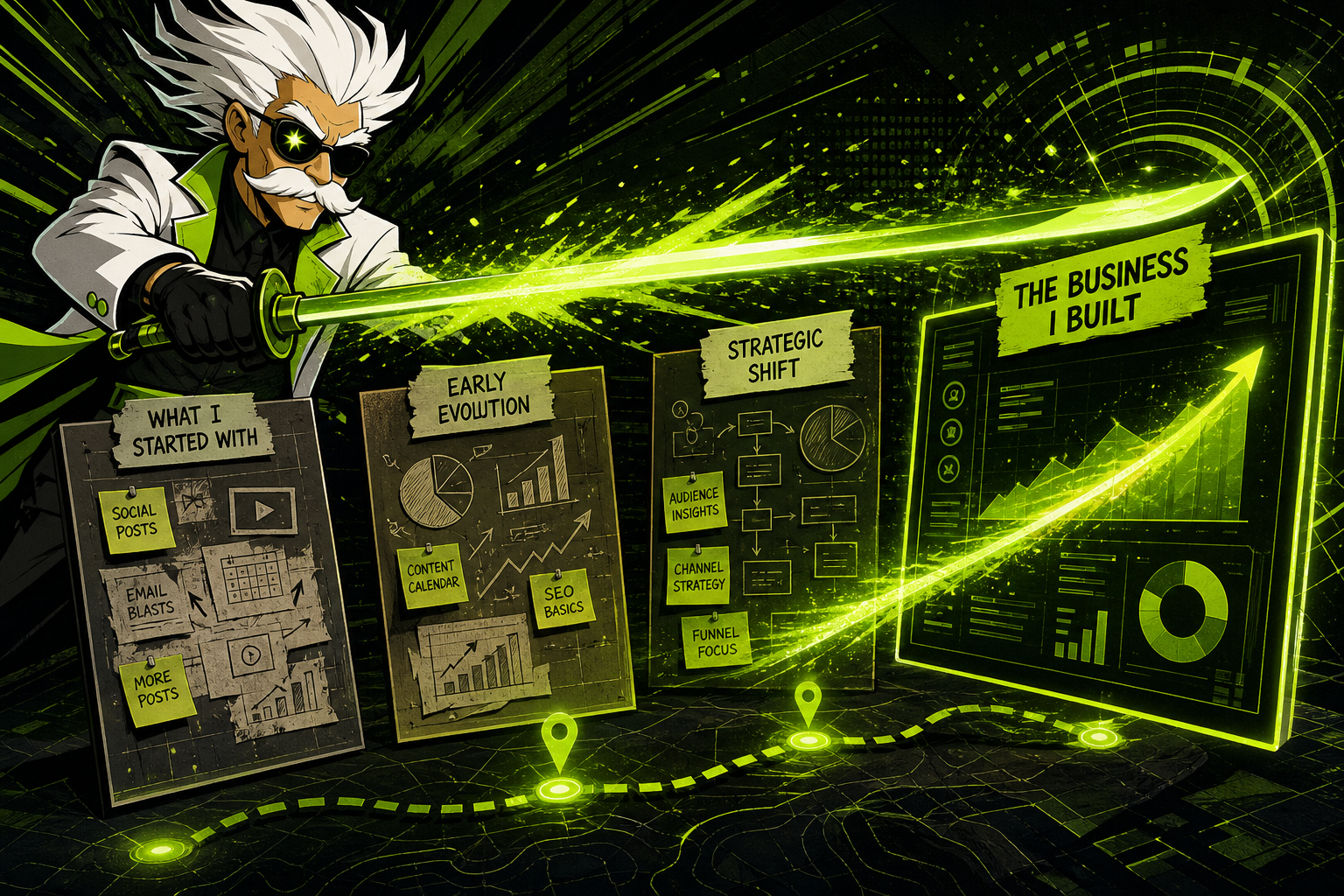
Looking back, I realize the agency I was trying to build thirty years ago isn't the same agency I'd choose to build today.
When I started my career, success seemed fairly straightforward.
Like most entrepreneurs, I wanted to build something people respected. I wanted great clients, talented employees, meaningful work, and a business that continued growing year after year. Revenue became an easy scoreboard because it was measurable. Every new client, every new employee, and every increase in sales felt like proof that we were moving in the right direction.
There was nothing wrong with that way of thinking. Every business needs momentum, and those early years are often about survival as much as growth. You learn how to sell. You learn how to serve clients. You learn how to lead people. Most importantly, you learn that building a business is far more difficult, and far more rewarding, than you ever imagined.
Looking back, though, I realize I was measuring success almost entirely by what other people could see.
Revenue.
Growth.
Headcount.
The size of our client roster.
Those are the numbers that show up on scorecards, in financial statements, and in conversations with other business owners. They're easy to celebrate because they're visible.
What I didn't appreciate at the time was that they don't necessarily tell you whether you're building a great business.
One of the interesting things about owning a business is that the questions you're asking today probably aren't the same questions you'll be asking ten years from now.
In the beginning, you're focused on finding clients and keeping the lights on. As the business grows, your attention shifts toward hiring great people, building systems, and creating consistency. Eventually, you start thinking less about getting bigger and more about getting better.
That was certainly true for me.
There came a point where I realized revenue, while incredibly important, wasn't giving me the complete picture. Revenue tells you how much business you're doing. It doesn't necessarily tell you how healthy that business is. On a personal level, I also learned that it doesn't determine how fulfilled you are as a business owner.
I've met entrepreneurs leading relatively small companies who genuinely love what they've built. I've also met leaders of much larger organizations who feel trapped by the very businesses they spent years creating. The difference rarely came down to revenue. More often, it came down to the kind of business they had built and the role that business played in their lives.
That realization stayed with me because it forced me to ask a different question.
What kind of marketing business did I actually want to build?
As my perspective evolved, I found myself paying attention to different things.
I cared deeply about whether we were building long-term relationships with clients instead of simply completing projects. I thought more about whether our team enjoyed coming to work, whether they had opportunities to grow professionally, and whether we were creating an environment where talented people could do their best work. I became increasingly interested in building systems that made the organization stronger every year instead of relying on a handful of people carrying all of the knowledge.
None of those things showed up on a profit and loss statement, but they had an enormous impact on the quality of the business we were building.
Looking back, I think this was one of the most important shifts in my thinking. Revenue remained an important measure of success, but it stopped being the only one. I became much more interested in building a company that was resilient, continually improving, and capable of creating opportunities for both our clients and our team.
One of the words I find myself thinking about more today is freedom.
Not freedom in the sense of working less. Anyone who has built a business knows entrepreneurship rarely works that way.
I'm talking about the freedom to make better decisions.
The freedom to invest in new ideas before they're proven.
The freedom to hire exceptional people because you believe they'll help shape the future of the company.
The freedom to turn down opportunities that don't align with your values.
The freedom to spend time improving the business instead of simply reacting to it.
Over time, I realized those freedoms don't come from chasing revenue alone. They come from building a healthier business. Strong client relationships create stability. Recurring revenue creates predictability. Great people create capacity. Well-designed systems create consistency. Together, those things give you choices.
I've come to believe that choices are one of the most valuable assets a business can create.
One of the unexpected things about building an agency over three decades is that you eventually realize you're not just delivering work. You're building an organization. Early on, I viewed every project, campaign, and client engagement as the product. The work we delivered was the business. Over time, I began to see something much different.
Every time we documented a process, we made it easier for the next person to do exceptional work. Every framework we developed represented knowledge that no longer lived inside one person's head. Every improvement to our systems made it easier to deliver a consistent experience for clients, regardless of who happened to be managing the project. Individually, those changes didn't feel particularly significant. Collectively, they transformed the way the business operated.
Looking back, I think we gradually shifted from building deliverables to building capabilities. We weren't just creating marketing campaigns; we were creating an organization that became smarter every year. Every client taught us something. Every successful project refined our thinking. Every challenge forced us to improve the way we worked. Instead of allowing those lessons to disappear once a project ended, we found ways to capture them so they could make the next client engagement even better.
That's one of the things I find most rewarding about building a business. The work you produce certainly creates value for clients, but the systems, knowledge, and experience you develop create value for the business itself. Those assets continue to compound over time. They help new employees succeed more quickly, they create a more consistent client experience, and they allow the organization to keep improving long after a single project has been completed.
Looking back, I don't think that realization changed the services we offered nearly as much as it changed the way I viewed the business. We weren't simply selling marketing anymore. We were building an organization that could continually learn, improve, and create more value with every passing year.
If I could sit down with the version of myself who was starting this journey thirty years ago, I don't think I'd tell him to chase more revenue.
I'd still encourage him to work hard.
I'd still tell him to care deeply about clients.
I'd still remind him that great people make all the difference.
But I'd also encourage him to spend more time thinking about the kind of business he wanted to build.
Because once you answer that question, many of the others become much easier.
You become more intentional about the clients you pursue.
The people you hire.
The culture you create.
The systems you invest in.
The opportunities you say yes to, and the ones you politely decline.
Looking back, I don't think the marketing business I wanted to build stayed the same.
I'm grateful it didn't.
The business I imagined thirty years ago gave me the opportunity to build something far more meaningful than I could have envisioned at the beginning. Today, I don't define success by the size of the agency as much as I define it by the quality of the business we've built, the people we've helped develop, the clients we've had the privilege to serve, and the opportunities we've created for others along the way.
For me, that's become a much more meaningful measure of success.
One of the reasons I'm writing the Agency Evolution Series is because I believe the most valuable lessons in business don't come from a single breakthrough or a perfectly executed strategy. They come from years of serving clients, leading people, adapting to change, and gradually refining your definition of what success really looks like.
If this article resonates with you, I hope you'll continue reading the series. My goal isn't to provide a blueprint for building an agency, because every business follows its own path. Instead, I hope these reflections encourage you to think a little differently about the business you're building and the kind of leader you're becoming along the way.
Because in the end, I don't think the greatest reward of entrepreneurship is simply building a bigger marketing agency.
I think it's building one that's increasingly worth owning.
See how RogIQ fits your business.
Schedule a Partner Demo